
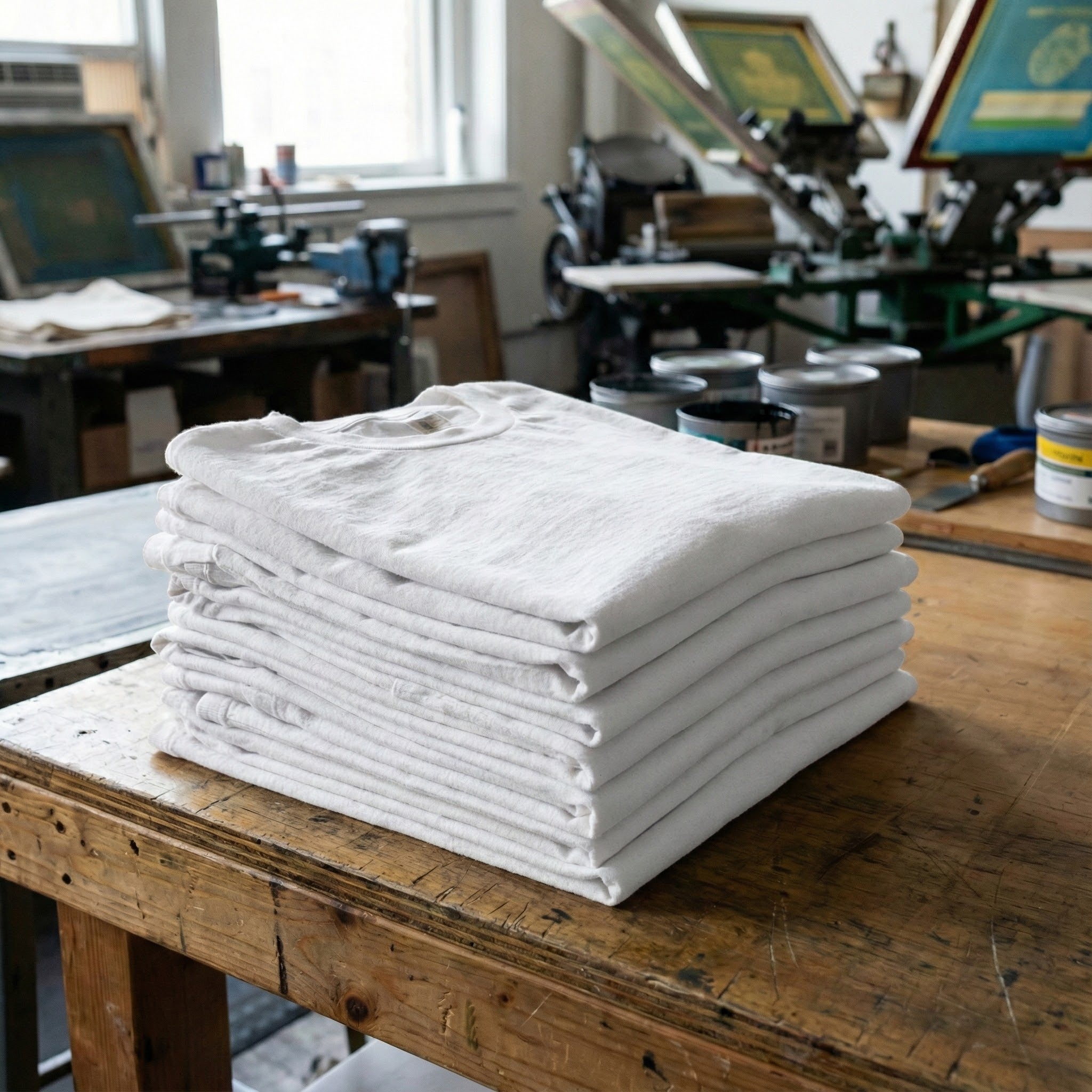

Most conversations about blanks start the same way. Ring-spun versus combed. Singles count. Hand feel. Everyone talks about softness like it’s the only thing that matters.
Meanwhile, open-end cotton keeps showing up in print shops every single day, quietly doing the work, rarely getting the credit. It’s not flashy. It’s not trendy. But for a lot of shops, it’s the backbone.
Let’s talk about why.
The Misconception
Open-end cotton gets labeled as “basic” or “budget,” and that label sticks. People assume it means rough, inconsistent, or lower quality. In reality, open-end cotton is built differently, not worse.
It’s spun in a way that creates a slightly thicker, more rugged yarn. That structure changes how the fabric behaves on press, in the dryer, and over time. For print shops, that difference matters more than people realize.
What Print Shops Actually Need
Most shops aren’t chasing runway softness. They’re chasing repeatable results. Shirts need to load easily, sit flat on the platen, and stay put under pressure.
Open-end cotton shines here. The slightly coarser texture grips ink better, especially with plastisol. Less ink soak-in. Cleaner edges. More forgiving prints during fast runs or when training staff.
Why It Handles Production Stress So Well
Open-end cotton is tougher by nature. It resists distortion under heat and pressure, which means fewer surprises during long production runs.
Shops printing volume jobs, uniforms, event tees, or promotional orders know this instinctively. These shirts are built to work, not just to feel nice on a hanger.
The Durability Factor Customers Don’t Talk About
Customers may not know what open-end cotton is, but they feel the results. Shirts hold their shape longer. Collars stay put. Fabric doesn’t collapse after a few washes.
For merch meant to be worn hard and washed often, reliability matters more than first-touch softness.
Where Softness Still Fits Into the Picture
Open-end cotton doesn’t have to feel rough or cheap. Construction, finishing, and quality control make the difference.
That’s where the Cotton Perfection T-Shirt 3100 changes the narrative. It combines the durability of open-end cotton with refined finishing for a smoother hand feel and a clean, premium print surface.
How the Cotton Perfection 3100 Bridges the Gap
The Cotton Perfection 3100 takes what print shops love about structured cotton and elevates it. The fabric stays stable on press. Ink lays down clean. Prints cure evenly.
At the same time, it feels intentional, not industrial. It works for production efficiency and branded merch where presentation still matters.
When Open-End Cotton Is the Right Call
Open-end cotton isn’t trying to replace ring-spun in every situation. It’s the right tool for specific jobs:
- High-volume production runs
- Promotional and event merchandise
- Uniform programs
- Merch that needs to last
In those scenarios, open-end cotton isn’t a compromise. It’s a smart choice.
The Bigger Takeaway
Not every great blank needs to be trendy. Some earn their place by being reliable, forgiving, and built for real production environments.
Open-end cotton has been doing that work quietly for years. Shirts like the Cotton Perfection T-Shirt 3100 prove that durability and refinement don’t have to compete. They can coexist.
Sometimes the unsung hero isn’t the one that feels the softest in the showroom. It’s the one that prints clean, holds up, and makes your shop run smoother.
Share:
The Real Reason Your Merch Isn’t Selling (And It’s Not the Design)
Heavyweight vs. Lightweight Tees: What Sells Better and Why